Introduction
Customers expect businesses to respond quickly, provide useful information, and make communication simple. Whether someone wants to know about a product, request a service, check availability, or ask about pricing, a delayed response can create a poor customer experience.
Managing every customer conversation manually can become difficult as a business grows. Teams may receive multiple enquiries simultaneously, repeat the same answers, and struggle to follow up with potential customers consistently.
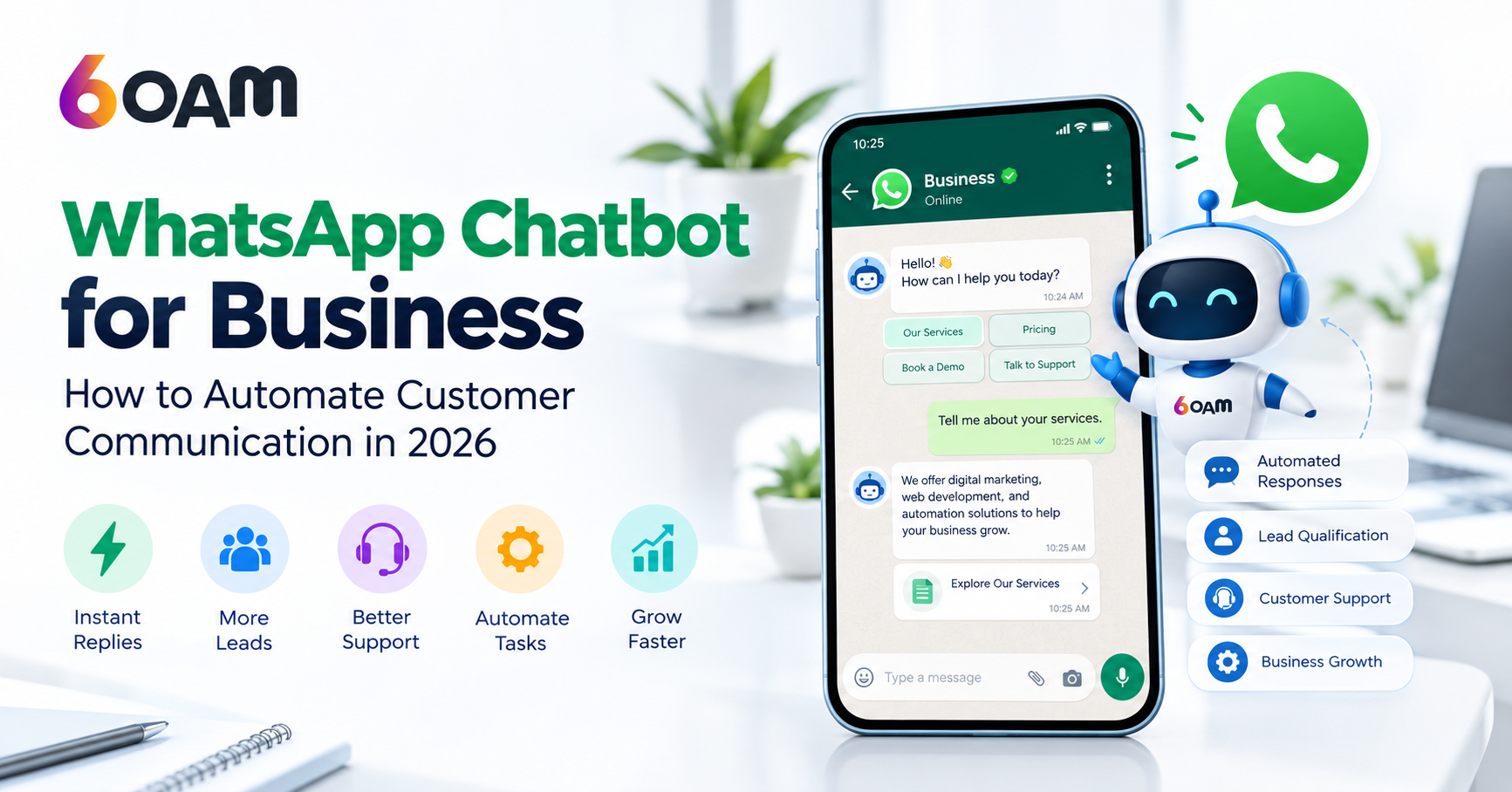
A WhatsApp chatbot for business can help address these challenges by automating routine conversations and making customer communication more organized.
Businesses can use WhatsApp chatbots to answer common questions, collect enquiry details, share relevant information, and guide customers toward the next step. When combined with a suitable business messaging and automation process, chatbots can also support lead qualification and customer engagement.
In this guide, we will explore how WhatsApp chatbots work, their benefits, practical business applications, implementation strategies, and how businesses can use automation to improve customer communication in 2026.
What Is a WhatsApp Chatbot for Business?
A WhatsApp chatbot for business is an automated messaging solution that interacts with customers through WhatsApp.
It can respond to common questions, provide information, collect customer details, and guide users through predefined conversations. Depending on the technology and configuration, a chatbot may use predefined workflows, AI-powered responses, or a combination of both.
For example, a customer contacting a business may want to:
- Learn about available services.
- Request a quotation.
- Ask about business hours.
- Get answers to frequently asked questions.
- Book an appointment.
- Speak with a sales representative.
A chatbot can help manage these initial interactions and direct customers toward the appropriate next step.
Businesses should choose chatbot capabilities according to their actual communication requirements rather than adding automation simply because it is available.
Why Are Businesses Using WhatsApp Chatbots?
WhatsApp is a familiar messaging platform for many customers. Businesses can use it as an additional communication channel to make enquiries and customer interactions more convenient.
A WhatsApp chatbot can help businesses manage repetitive communication while maintaining a more structured process.
Some common reasons businesses consider chatbot automation include:
1. Managing Customer Enquiries
Businesses frequently receive similar questions about their services, products, availability, and processes.
A chatbot can provide predefined answers to common questions and help customers find relevant information without requiring a team member to respond manually every time.
This allows employees to focus on enquiries that need individual attention.
2. Improving Response Consistency
When different team members respond to customer questions, the information provided may vary.
A chatbot can use approved responses and structured conversation flows to provide consistent information.
Businesses should regularly review chatbot messages to ensure that information remains accurate and relevant.
3. Supporting Lead Generation
A WhatsApp chatbot can help collect basic information from interested prospects.
For example, it may ask about:
- Customer name.
- Business requirements.
- Interested service.
- Preferred contact time.
- Additional questions or requirements.
The collected information can help the sales team understand the enquiry and determine the appropriate follow-up.
4. Organizing Customer Communication
Without a structured process, customer conversations may become difficult to manage.
A chatbot connected to suitable business systems can help record enquiries, organize customer information, and support follow-up activities.
The exact capabilities depend on the platform, integrations, and workflow configuration.
7 Benefits of a WhatsApp Chatbot for Business
1. Automated Customer Responses
One of the main benefits of a WhatsApp chatbot is the ability to automate routine responses.
Businesses can configure answers for frequently asked questions about services, business hours, contact information, and general processes.
This helps customers access basic information without waiting for a team member.
Automation should also provide a clear option to contact a human when a question requires personal assistance.
2. Better Lead Qualification
Not every enquiry represents the same business opportunity.
A chatbot can ask relevant questions to understand the customer’s requirements before transferring the conversation to the sales team.
For example, a service business may ask which service the customer needs, their location, and whether they want a consultation.
This information can help sales representatives prioritize enquiries and prepare for conversations.
3. More Consistent Follow-Ups
Potential customers may need additional information before making a decision.
A structured WhatsApp automation workflow can help businesses manage follow-up reminders and communication based on customer actions.
For example, when a prospect requests a consultation, the business may send a confirmation and create a follow-up task.
Businesses should ensure that follow-up messages are relevant, appropriately timed, and compliant with applicable messaging rules.
4. Improved Customer Engagement
Customers often appreciate convenient communication and clear answers.
A chatbot can guide users through relevant information, provide useful resources, and help them identify the next step.
Businesses can also use structured conversations to understand customer interests and improve their communication approach.
5. Reduced Manual Work
Customer support and sales teams spend time answering repeated questions, recording information, and organizing enquiries.
Automation can reduce some of these repetitive tasks.
However, chatbots should not replace human support when customers need personalized assistance, complex explanations, or help resolving unusual problems.
6. Organized Enquiry Management
A WhatsApp chatbot can support a more organized enquiry process when connected to a suitable CRM or business platform.
Depending on the integration, businesses may be able to record customer details, assign enquiries, and track follow-up activities.
This can improve visibility into customer communication and reduce the risk of enquiries being overlooked.
7. Support for Business Growth
As enquiry volume increases, businesses need a communication process that can handle more interactions efficiently.
A chatbot can support routine conversations and help teams manage enquiries more consistently.
The overall impact depends on chatbot quality, customer needs, workflow design, and how effectively the business handles conversations that require human attention.
How Does WhatsApp Chatbot Automation Work?
WhatsApp chatbot automation generally involves connecting customer conversations with automated responses and business workflows.
The process may include the following steps.
Step 1: Customer Starts a Conversation
A customer contacts the business through WhatsApp using an available business messaging channel.
The customer may ask a question, request information, or express interest in a service.
Step 2: Chatbot Identifies the Enquiry
The chatbot uses configured conversation rules or AI capabilities to understand the customer’s request.
For example, the enquiry may relate to pricing, service information, appointment booking, or customer support.
Step 3: Chatbot Provides Relevant Information
The chatbot responds using approved information or a configured workflow.
If the request is straightforward, the customer may receive the answer immediately.
If the request requires additional information, the chatbot can ask relevant questions.
Step 4: Customer Information Is Collected
When appropriate, the chatbot collects details needed to process the enquiry.
Businesses should avoid requesting unnecessary personal information and explain why information is being collected when appropriate.
Step 5: Enquiry Is Routed or Recorded
Depending on the integration, the enquiry may be recorded in a CRM, assigned to a team member, or connected to a follow-up workflow.
This helps businesses maintain a consistent process for managing customer conversations.
Step 6: Human Support Handles Complex Requests
If the chatbot cannot answer a question accurately, the conversation should be directed to an appropriate team member.
A clear handoff process helps customers receive assistance without repeatedly explaining their requirements.
WhatsApp Chatbot Use Cases for Different Businesses
WhatsApp chatbot automation can support different business communication requirements.
E-Commerce Businesses
E-commerce businesses may use chatbots to answer questions about products, order information, delivery processes, and customer support.
The chatbot should provide accurate information and direct customers to the appropriate support process when required.
Real Estate Businesses
Real estate businesses can use WhatsApp chatbots to collect property enquiries and understand customer preferences.
A chatbot may ask about the preferred location, property type, budget range, and requirements before routing the enquiry to a property consultant.
Digital Marketing Agencies
Digital marketing agencies can use chatbots to collect service enquiries, understand campaign requirements, and arrange consultations.
The collected information can help the team prepare for discussions with potential clients.
Service-Based Businesses
Consultants, agencies, and other service providers may use WhatsApp chatbots to answer common questions, collect project details, and manage consultation requests.
This can help create a more organized enquiry process.
Educational Institutions
Educational institutions may use chatbots to answer general questions about courses, admissions processes, schedules, and enquiry procedures.
Complex admission questions should be directed to the relevant department.
How to Choose the Right WhatsApp Chatbot for Business
Selecting the right chatbot requires understanding your business communication needs.
Consider the following factors before implementing a solution.
1. Define Your Business Objective
Decide what you want the chatbot to achieve.
Your objective may include answering common questions, collecting leads, managing support enquiries, or organizing appointment requests.
A clearly defined objective makes it easier to select relevant features.
2. Review Automation Capabilities
Check whether the chatbot supports the conversation flows your business needs.
Consider predefined responses, AI-powered interactions, lead qualification, and the ability to transfer conversations to human representatives.
3. Check CRM Integration
If your business uses a CRM, review whether the chatbot can connect with it.
Integration may help organize customer details, record enquiries, and support sales follow-ups.
Confirm which integrations are available before choosing a platform.
4. Consider Customer Experience
A chatbot should make communication easier rather than more complicated.
Use clear language, simple conversation options, and relevant questions.
Customers should be able to request human assistance when necessary.
5. Review Privacy and Messaging Requirements
Businesses should understand applicable privacy requirements and WhatsApp messaging policies.
Use appropriate consent processes, protect customer information, and avoid sending irrelevant or unwanted messages.
Review the current requirements of the platform and your business jurisdiction before implementation.
6. Measure Performance
After implementation, monitor chatbot performance using meaningful metrics.
These may include:
- Number of conversations started.
- Enquiries collected.
- Qualified leads generated.
- Human handoff frequency.
- Response completion rate.
- Customer satisfaction.
- Enquiry-to-customer conversion.
Use these metrics to identify where the chatbot needs improvement.
Common WhatsApp Chatbot Mistakes to Avoid
Businesses should avoid the following mistakes when implementing chatbot automation:
- Creating complicated conversation flows.
- Providing inaccurate or outdated answers.
- Asking too many questions before helping customers.
- Making it difficult to contact a human representative.
- Sending excessive automated messages.
- Collecting unnecessary customer information.
- Ignoring customer feedback.
- Failing to monitor chatbot performance.
- Using automation without a clear business objective.
A successful chatbot should provide useful information, support customer needs, and work alongside the business team.
How 6OAM Can Help With AI and WhatsApp Bot Solutions
Businesses looking to improve customer communication may need a structured approach to messaging, automation, and lead management.
6OAM offers an AI & WhatsApp Bot service for businesses exploring chatbot-based communication and automation.
Businesses can review the service to understand how it may align with their requirements for customer interactions, automated responses, and enquiry management.
Explore the 6OAM AI & WhatsApp Bot service.
You can also explore 6OAM Marketing Automation to learn more about automation-related business processes.
Before implementing a chatbot, identify the conversations you want to automate, the information customers need, and the situations that require human support.
Frequently Asked Questions
1. What is a WhatsApp chatbot for business?
A WhatsApp chatbot for business is an automated messaging solution that helps businesses respond to customer questions, collect enquiries, provide information, and guide conversations through WhatsApp.
2. How does a WhatsApp chatbot help businesses?
A WhatsApp chatbot can help businesses automate routine responses, organize enquiries, collect lead information, support customer engagement, and manage follow-up workflows.
3. Can a WhatsApp chatbot generate leads?
Yes. A chatbot can collect relevant information from interested customers and help businesses understand their requirements. The quality of leads depends on targeting, questions, and the business offering.
4. Can WhatsApp chatbots provide customer support?
WhatsApp chatbots can answer common questions and provide basic information. Complex issues should be transferred to a human support representative.
5. Is WhatsApp chatbot automation suitable for small businesses?
It can be useful for small businesses that receive repeated enquiries or need a more organized communication process. The appropriate solution depends on enquiry volume, budget, and business requirements.
6. What is the difference between a WhatsApp chatbot and WhatsApp automation?
A WhatsApp chatbot interacts with customers through automated conversations. WhatsApp automation can also include other workflows, such as notifications, lead assignment, follow-up reminders, and CRM updates.
7. Can a WhatsApp chatbot integrate with CRM software?
Some chatbot platforms support CRM integrations. Depending on the integration, businesses may be able to record enquiries, organize customer information, and manage follow-up activities.
8. How can businesses improve WhatsApp chatbot performance?
Businesses can improve chatbot performance by simplifying conversation flows, updating responses, reviewing customer feedback, tracking enquiry outcomes, and providing a clear option for human support.
Conclusion
A WhatsApp chatbot for business can help organizations manage customer communication, respond to common questions, collect enquiries, and support lead qualification.
The most effective chatbot strategy focuses on customer needs rather than automation alone. Businesses should create simple conversation flows, provide accurate information, protect customer data, and ensure that human support remains available when needed.
By combining chatbot automation with a structured lead management process, businesses can improve communication consistency and make it easier to manage customer enquiries.
If your business is exploring chatbot-based communication, visit 6OAM AI & WhatsApp Bot to learn more about the service.
Contact 6OAM
- Location: Delhi NCR
- Phone: +91 9429693950
- Email: au@6oam.com
- Website: 6OAM